
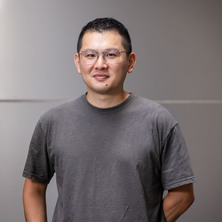
We are pleased to announce that Dr Robert Ju of The University of Queensland has been awarded the 2025 NARF Postdoctoral Award, recognising his outstanding research track record and innovative contributions to cell biology and cancer research.
Dr Ju’s award-winning work addresses a fundamental challenge in cancer biology: how cells survive and migrate through crowded, mechanically stressful tissue environments. During metastasis, cancer cells must squeeze through narrow spaces, experiencing intense compression; yet, how they resist these forces has remained poorly understood.
In a recent landmark study, Dr Ju and collaborators described a new mechanical feedback mechanism termed the “microtubule mechanostat.” They showed that when microtubules experience compressive stress, they are locally reinforced through the recruitment of cytoplasmic linker–associated proteins (CLASPs). This reinforcement precisely controls the release of contractility regulators, enabling cells to generate force in the right place and time to move through confined environments while maintaining cell integrity.
Using advanced microfabrication, live-cell imaging, and quantitative modelling, the team demonstrated that disrupting this mechanism causes uncontrolled contractility, membrane damage, and cell rupture. These findings reveal a previously unrecognised vulnerability in invasive cancer cells.
Read the paper here: xhttps://www.nature.com/articles/s41556-024-01476-x
Dr Ju’s work suggests that targeting how cancer cells resist mechanical stress could open new therapeutic avenues to limit metastasis and potentially enhance anti-tumour immune responses. His research has been published in leading journals, including Nature Cell Biology and Nature Communications.
The 2025 NARF Postdoctoral Award was awarded from an exceptionally competitive field of applicants, highlighting both the high calibre of submissions and the depth of talent among Australia’s early career researchers. Dr Ju’s success is a strong reflection of the outstanding quality, creativity, and international impact of research being led by early-career scientists across the country.